-
If your model for tactics in the Israel–Palestinian conflict is roughly Pontecorvo's Battle of Algiers, you're likely to be shocked by the amount of Israeli terrorism since 1980.Permalink On twitter.com

 ❤️ 5 Favorites
Mood -5 🙁
❤️ 5 Favorites
Mood -5 🙁
-
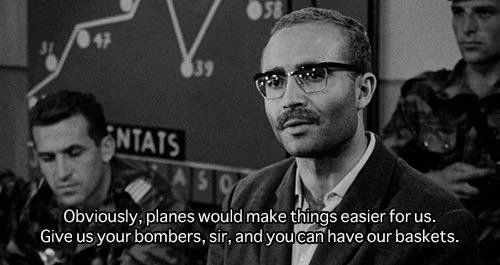
In the film, Algerian revolutionary Larbi Ben M'hidi compares tactics of occupier and occupied: “Obviously, planes would make things easier for us. Give us your bombers, sir, and you can have our baskets [of explosives].”Permalink On twitter.com
 ❤️ 3 Favorites
Mood 0
❤️ 3 Favorites
Mood 0
-
At another moment, the film lays out a trajectory of armed action, no doubt familiar to French viewers aware of the Resistance, from scattered acts of terror to a general insurrection.Permalink On twitter.com
❤️ 3 Favorites
Mood -5 🙁
-
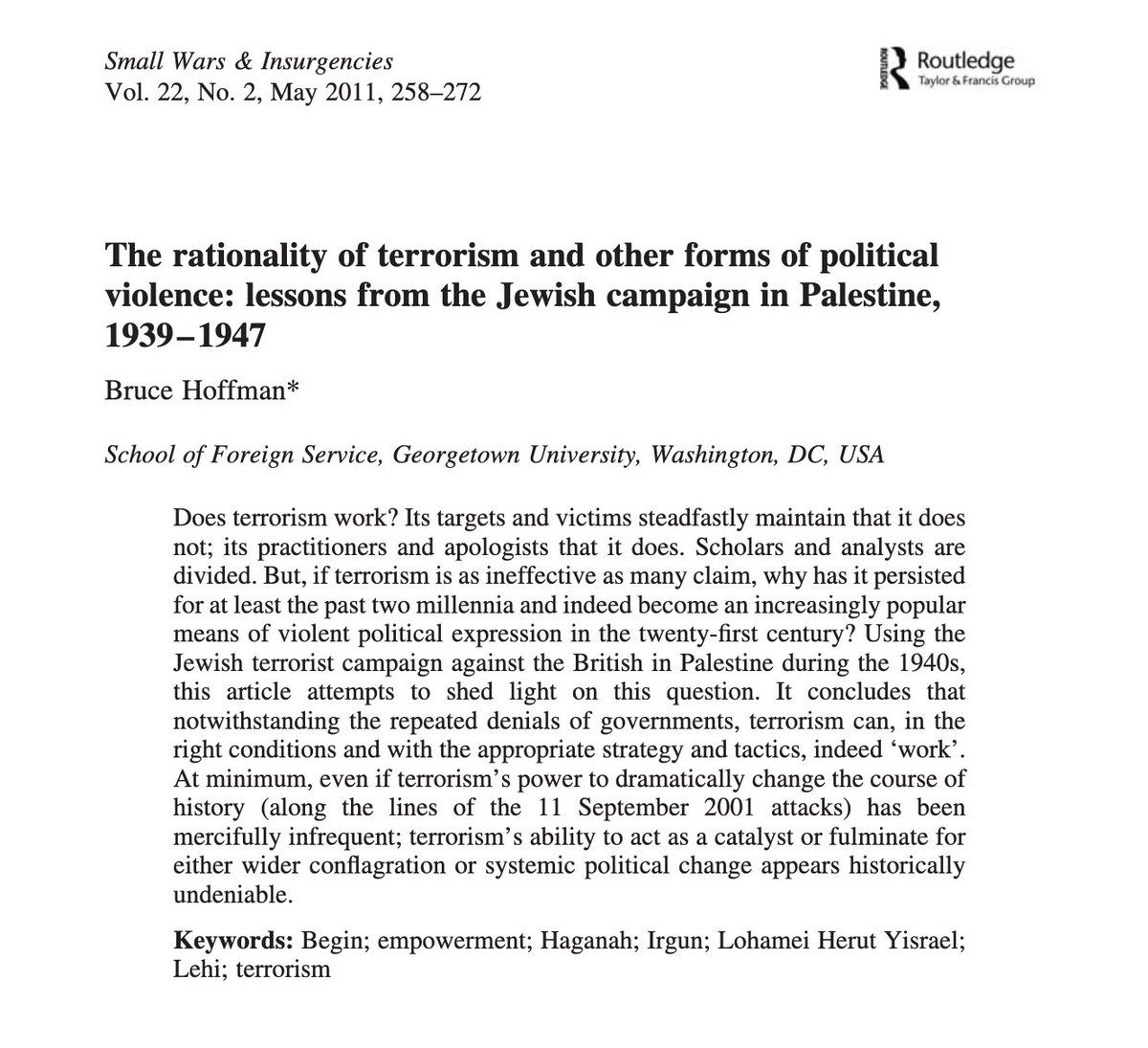
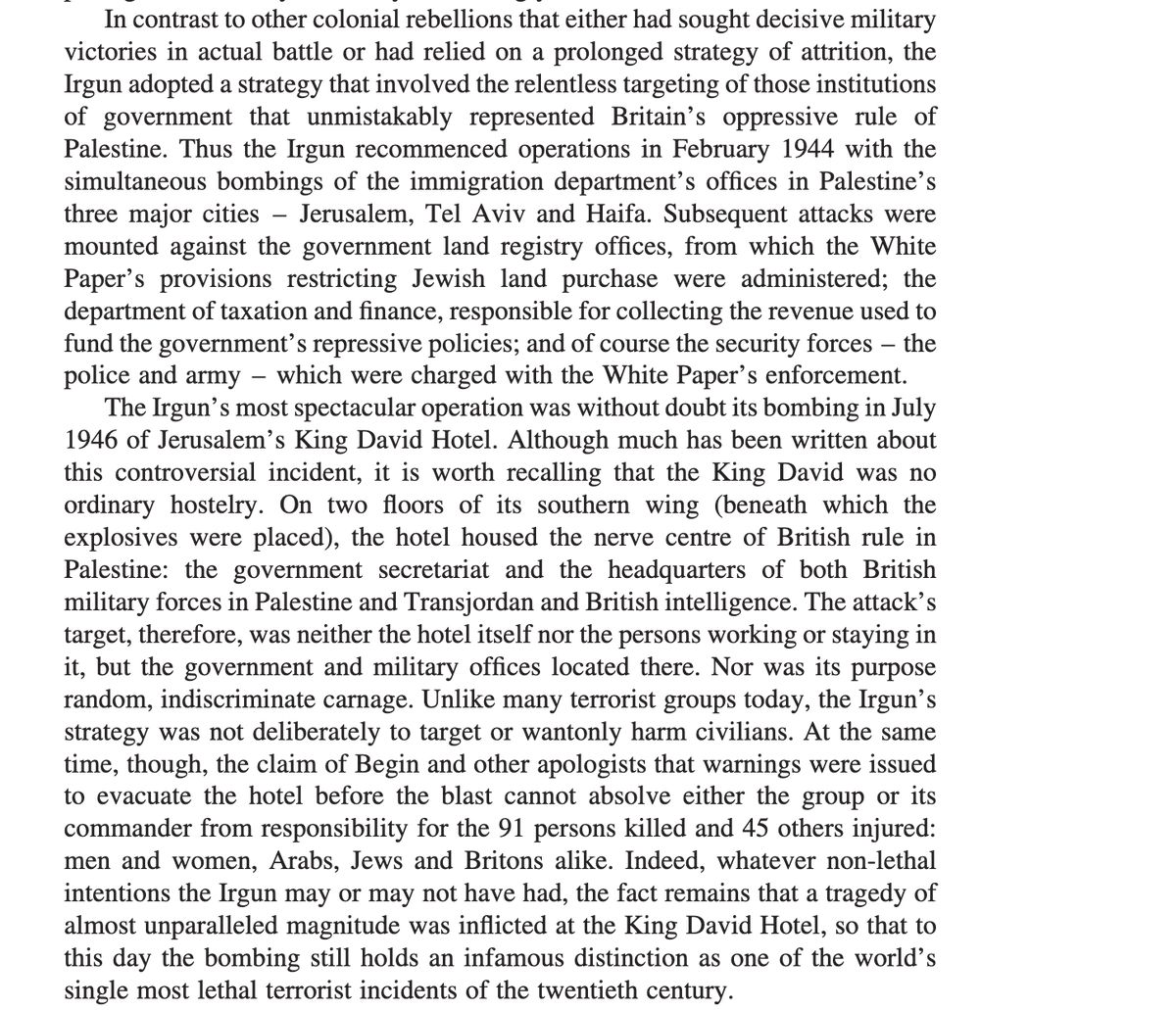
One hand, one might assume that Israeli history followed this trajectory, with all of the bombings, militias, and coercive terror happening before independence. And statehood bringing a transition to conventional warfare.Permalink On twitter.com
 ❤️ 2 Favorites
Mood -5 🙁
❤️ 2 Favorites
Mood -5 🙁
-
On the other side, one might assume that the Palestinians in occupation had a tendency to be the more indiscriminately violent party, the pioneers in using car bombs and mass shootings as means of struggle.Permalink On twitter.com
❤️ 2 Favorites
Mood -5 🙁
-
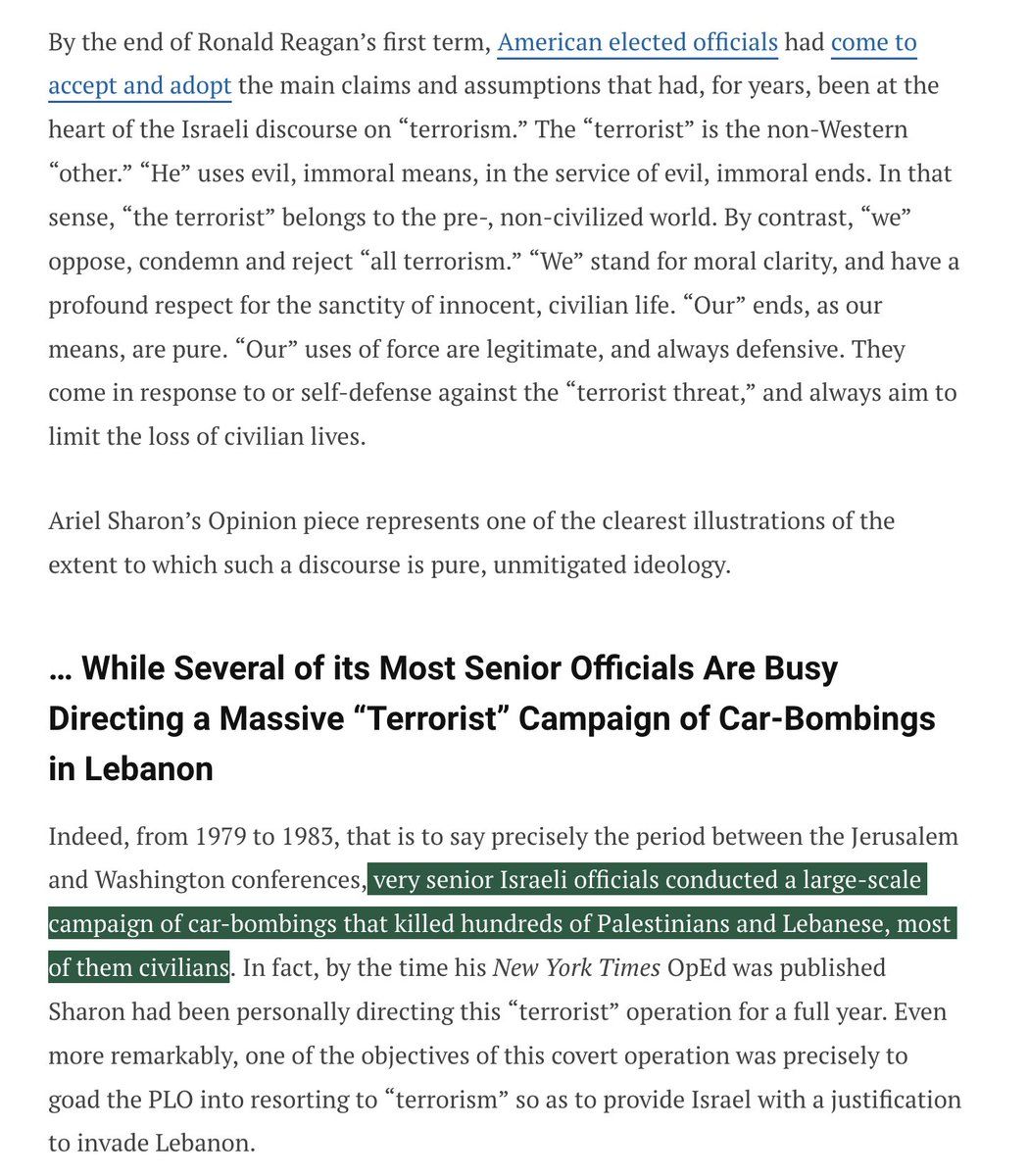
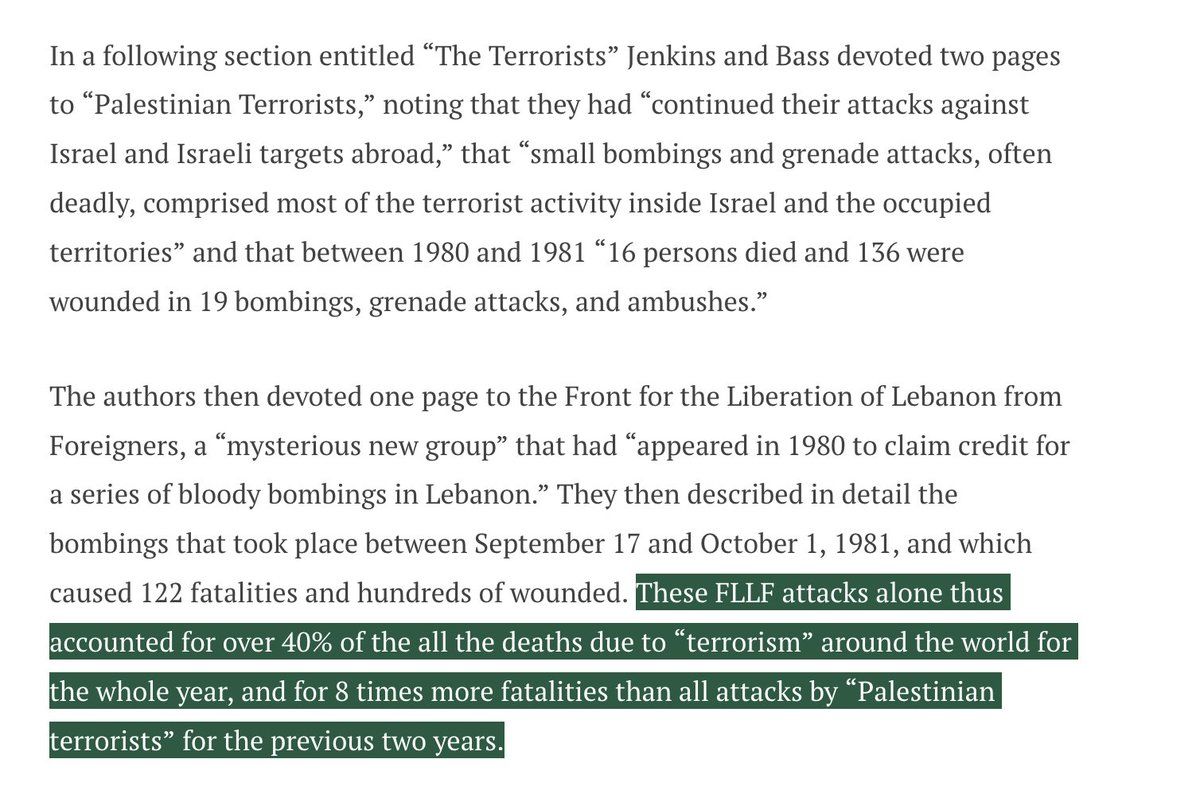
But if so, the 1980s in Lebanon and the West Bank will be surprising, for the Israeli state carried out an extensive car bombing campaign in Lebanon, leading not following Palestinian violence in scale and range. mondoweiss.net/2018/05/remarkable-disappearing-terrorism/On twitter.com
❤️ 2 Favorites
Mood -1 🙁
-
In the Western memory, the car bomb became almost synonymous with Islamic terrorism in Lebanon, effectively memory-hole-ing a massive Israeli campaign.Permalink On twitter.com
 ❤️ 2 Favorites
Mood +1 🙂
❤️ 2 Favorites
Mood +1 🙂
-
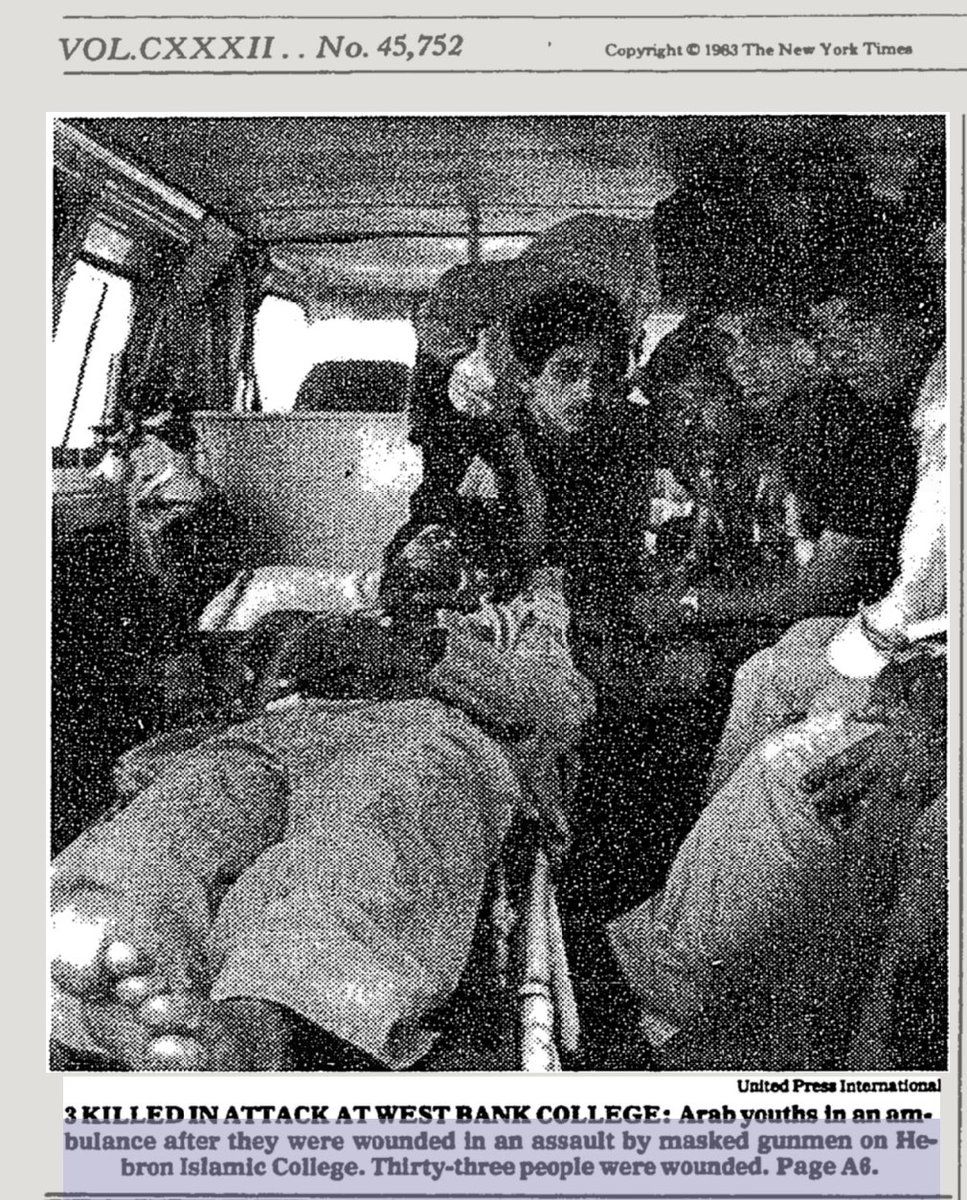
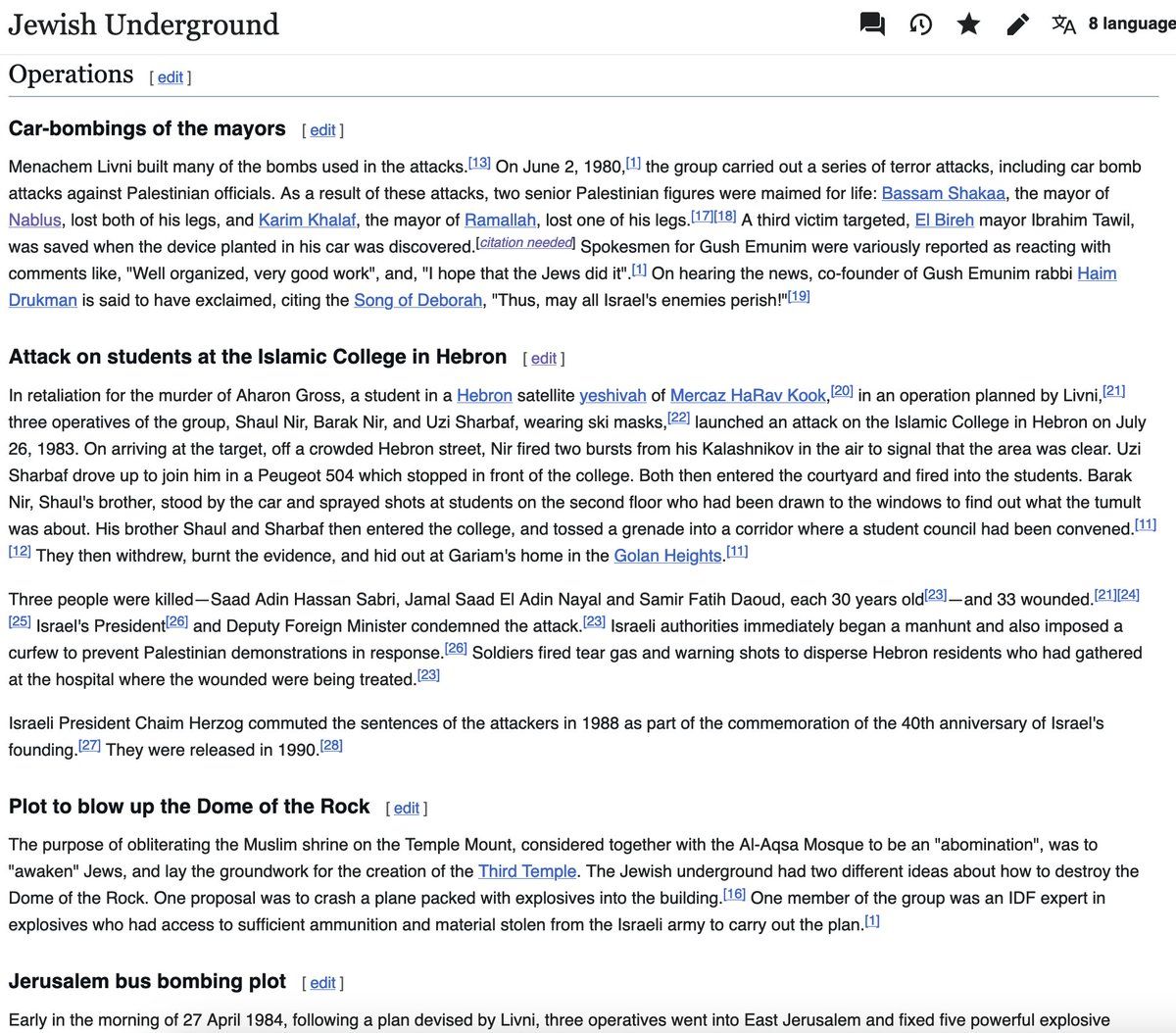
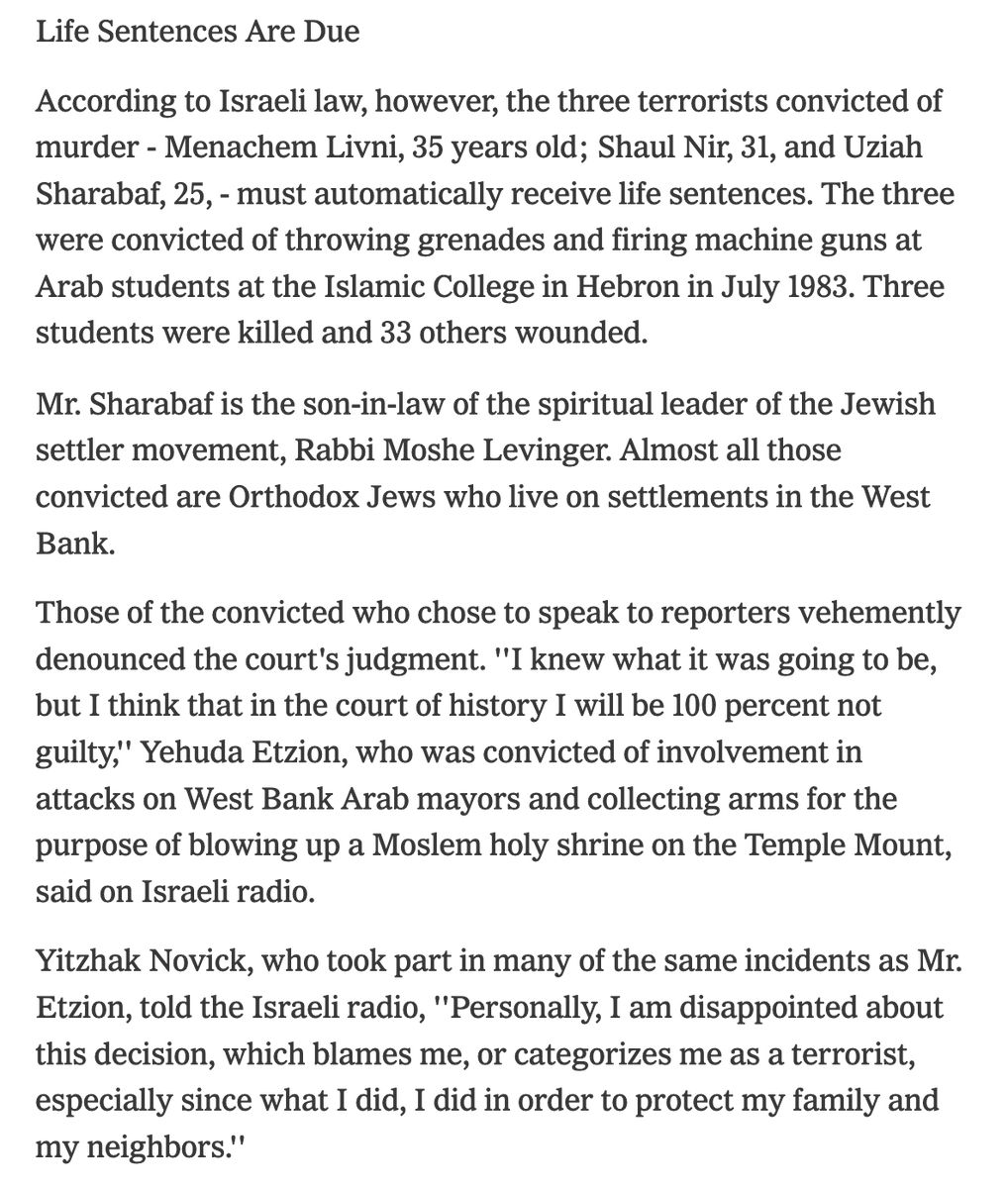
Meanwhile in the West Bank and Jerusalem, a "Jewish Underground" operated despite having an above-ground state militarily occupying Palestine. It mounted car bombings of Arab mayors and a mass shooting at a Hebron college. en.wikipedia.org/wiki/Jewish_UndergroundPermalink On twitter.com
 ❤️ 2 Favorites
Mood 0
❤️ 2 Favorites
Mood 0
-
Modern US-Israeli warfare is justified by a focus on the unique moral and practical threat of Islamic terrorism. Not only does this rely on excusing, say, family annihilation through airstrikes, it also requires suppressing the history of Israeli and Zionist terror attacks.Permalink On twitter.com
❤️ 2 Favorites
Mood -6 🙁
-
Some of this suppression is cognitive, re-categorizing a the pager explosions as a targeted counter-insurgency, for example, but some is enforced amnesia.Permalink On twitter.com
❤️ 2 Favorites
Mood 0