-
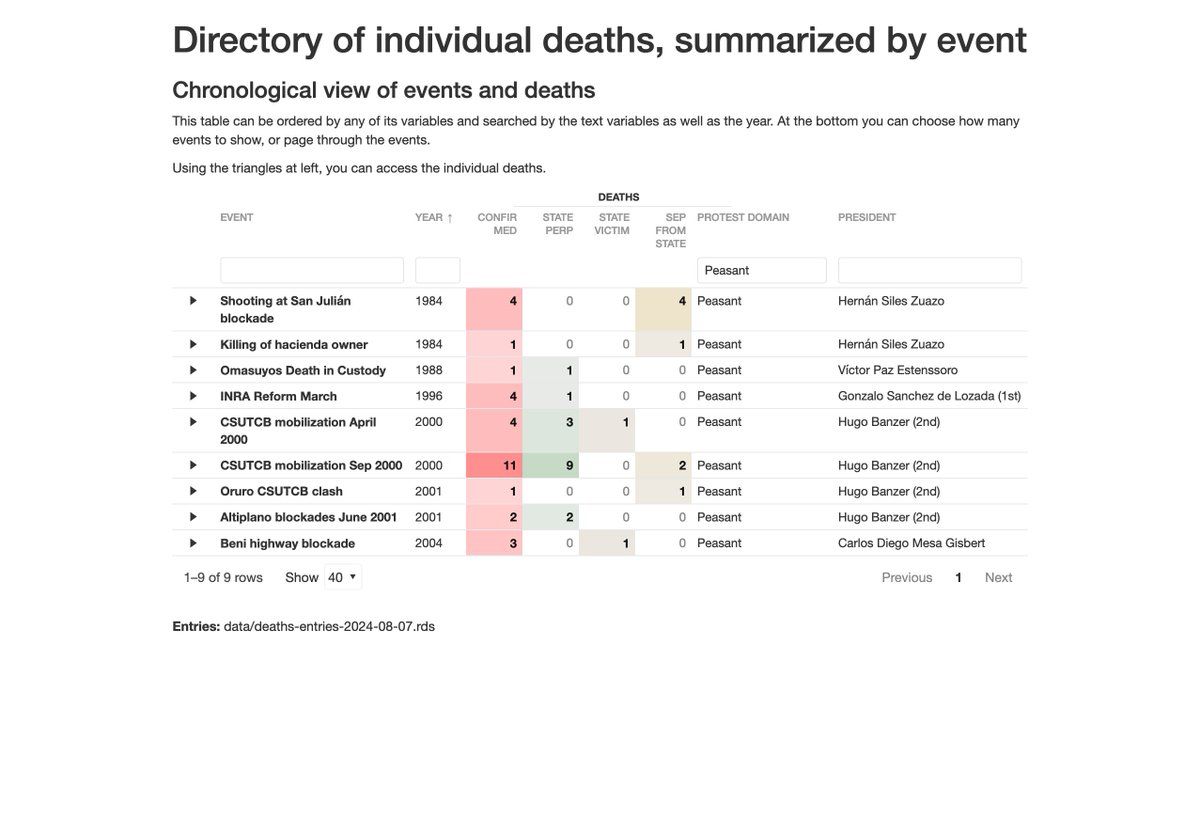
@Animeorama Prior governments did have direct policy conflicts with grassroots movements, or intervened in defense of enterprises and landlords. Deadly government–peasant conflict all but ended once Evo arrived.Permalink On twitter.com

 ❤️ 1 Favorite
Mood -7 🙁
❤️ 1 Favorite
Mood -7 🙁
-
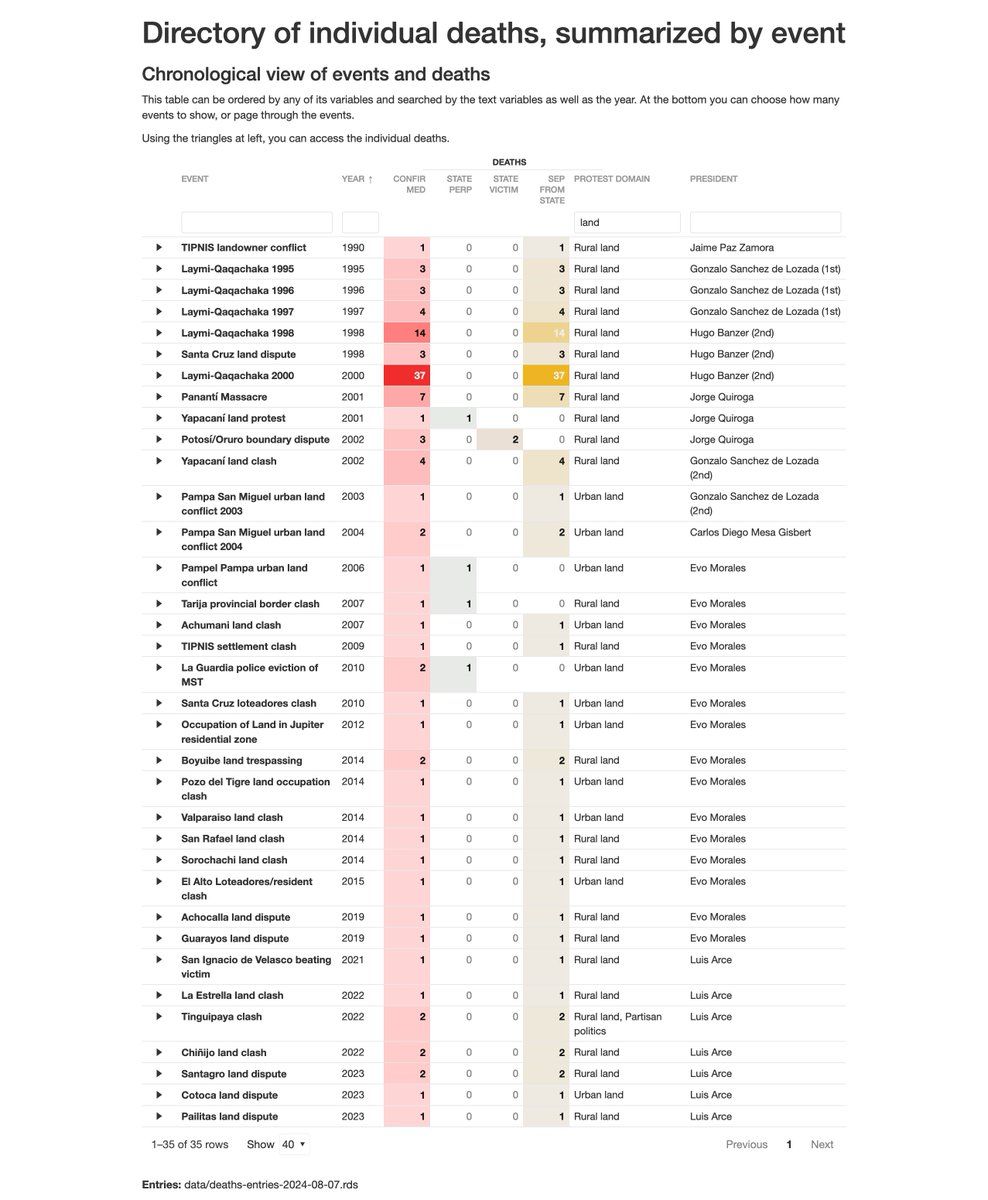
@Animeorama Lateral conflict over land has been around for a long time. The deadliest strand of this was the "Guerra de los Ayllus", an interethnic rivalry that the Morales government also helped to de-escalate.Permalink On twitter.com
 ❤️ 1 Favorite
Mood -2 🙁
❤️ 1 Favorite
Mood -2 🙁
-
@Animeorama But in exchange, there's been an increased frequency of lateral attacks between claimants to rural and urban land. This is highly localized, but increasingly violent over time.Permalink On twitter.com
❤️ 1 Favorite
Mood -3 🙁
-
@Animeorama State presence in these disputes is often late, counting the bodies and slowly prosecuting perpetrators. But this was true for the Panantí massacre (2001) and Yapacaní (2001-02) as well as since the MAS-IPSP came to power.Permalink On twitter.com
❤️ 1 Favorite
Mood -2 🙁
-
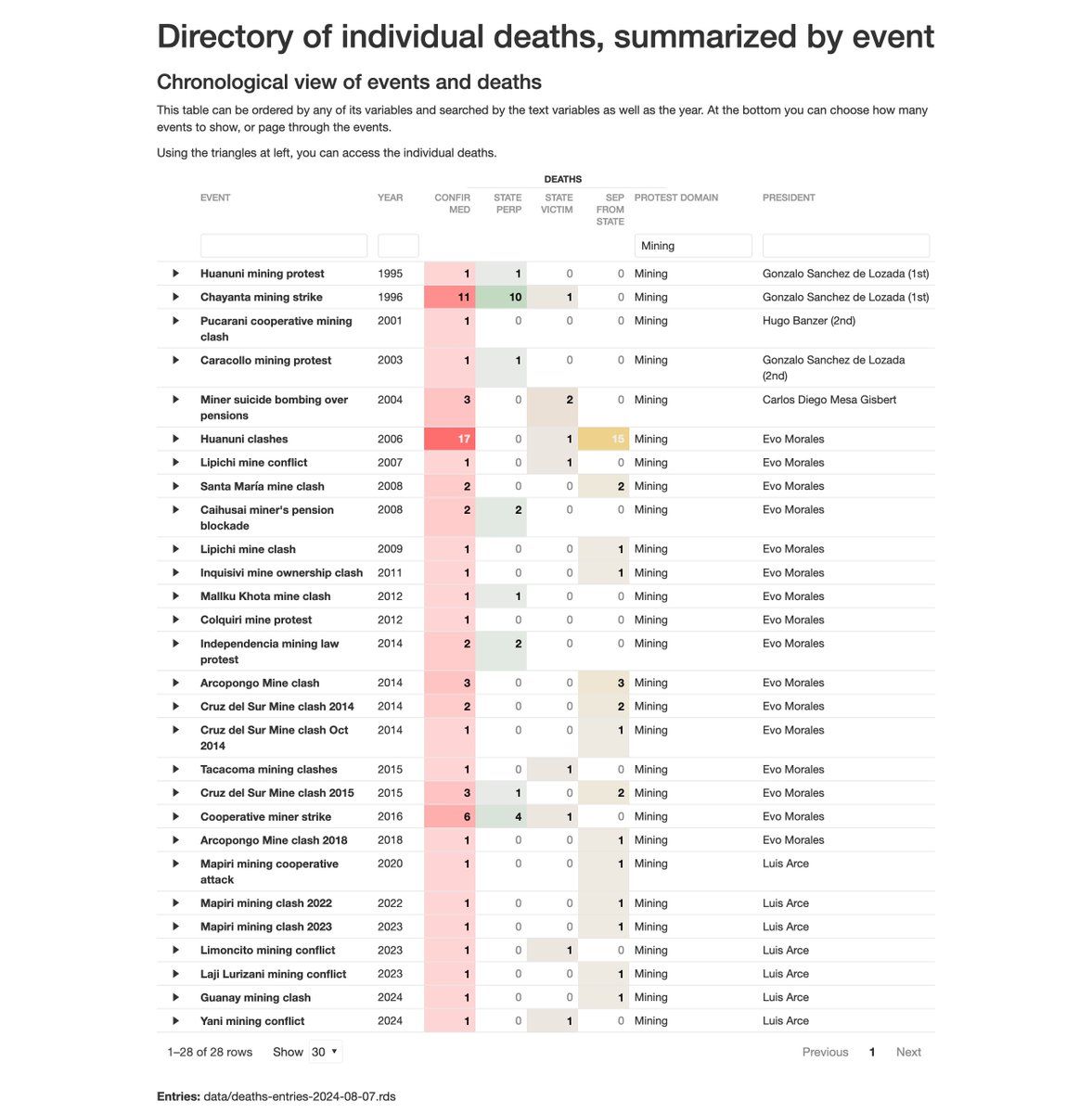
@Animeorama It's mining where things have changed the most. Pre-2009, mining disputes were union v. enterprise. Now they are largely rivalries over cooperative mines or open struggles between miners and communities.Permalink On twitter.com
 ❤️ 3 Favorites
Mood -4 🙁
❤️ 3 Favorites
Mood -4 🙁
-
@Animeorama If there's a cross-sector story here, it's that organized collective actors—cooperative miners, intercultural peasants—have achieved a certain political influence, while also pushing claims of questionable legality on a resource frontier. Death ensue. Also, guns…Permalink On twitter.com
❤️ 2 Favorites
Mood -3 🙁
-
@Animeorama Guns were once very rare in these conflicts—the Laymi-Qaqachaka massacres were house burnings and stabbings—and now we're seeing multi-day conflicts involving bullet wounds. // against my normal research process, I'm saying this without reviewing the data in detail.On twitter.com
❤️ 2 Favorites
Mood -2 🙁