-
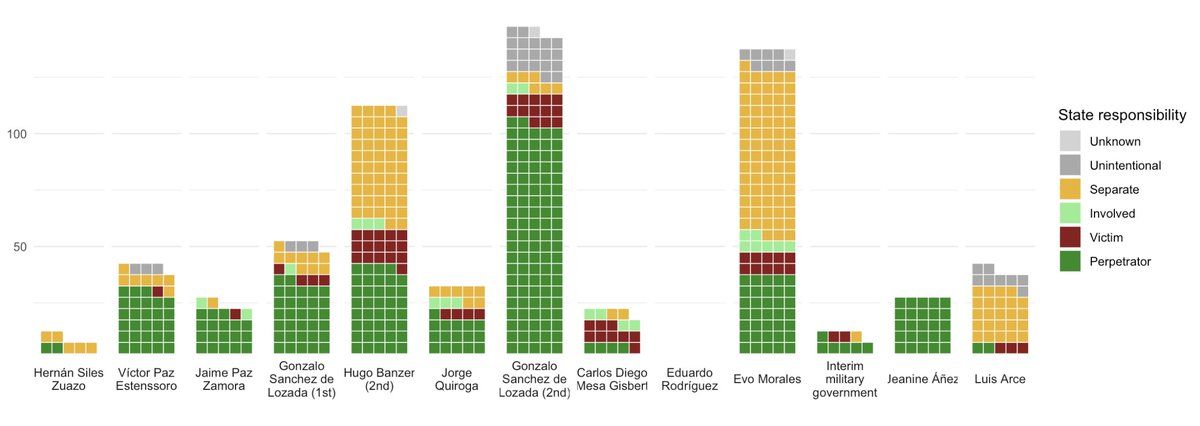
As President Luis Arce nears the four-year mark, political violence in Bolivia looks very different than prior presidential administrations…On twitter.com

 ♻️ 3 Retweets
❤️ 7 Favorites
Mood -3 🙁
♻️ 3 Retweets
❤️ 7 Favorites
Mood -3 🙁
-
Not relevant to the analysis I've posted here, but this chart isn't strictly fair b/c Bolivian presidents had diff terms… Gonzalo Sánchez de Lozada's 2nd presidency was 14 months; Evo Morales served for 14 years. Very different intensities of violence look similar here.Permalink On twitter.com
❤️ 3 Favorites
Mood -1 🙁
-
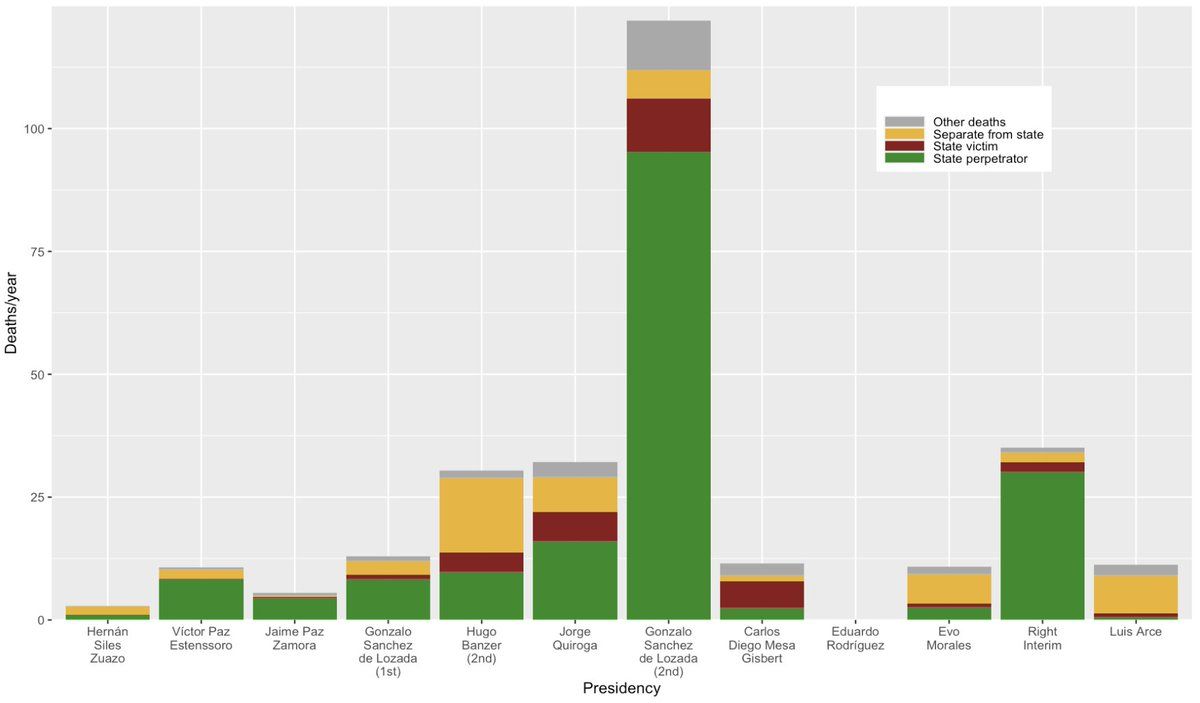
The data expressed in terms of annual rates looks like this instead. (Interim military government & Jeanine Áñez combined in this chart as "Right interim")Permalink On twitter.com
 ❤️ 1 Favorite
Mood +2 🙂
❤️ 1 Favorite
Mood +2 🙂
-
As this chart shows, state participation in political violence has been minimal under Arce. Only two people have been killed in sociopolitical conflicts by security forces, a jailed official who died after mistreatment and a protester wounded by a less-lethal munition.Permalink On twitter.com
Mood -13 🙁
-
Only one presidency saw less lethal violence by Bolivian security forces since 1982: Eduardo Rodríguez's eight-month interim government.Permalink On twitter.com
Mood -5 🙁
-
Still, the overall death toll has averaged 11 per year, in the middle of the pack for Bolivian presidents under democracy.Permalink On twitter.com
Mood -2 🙁
-
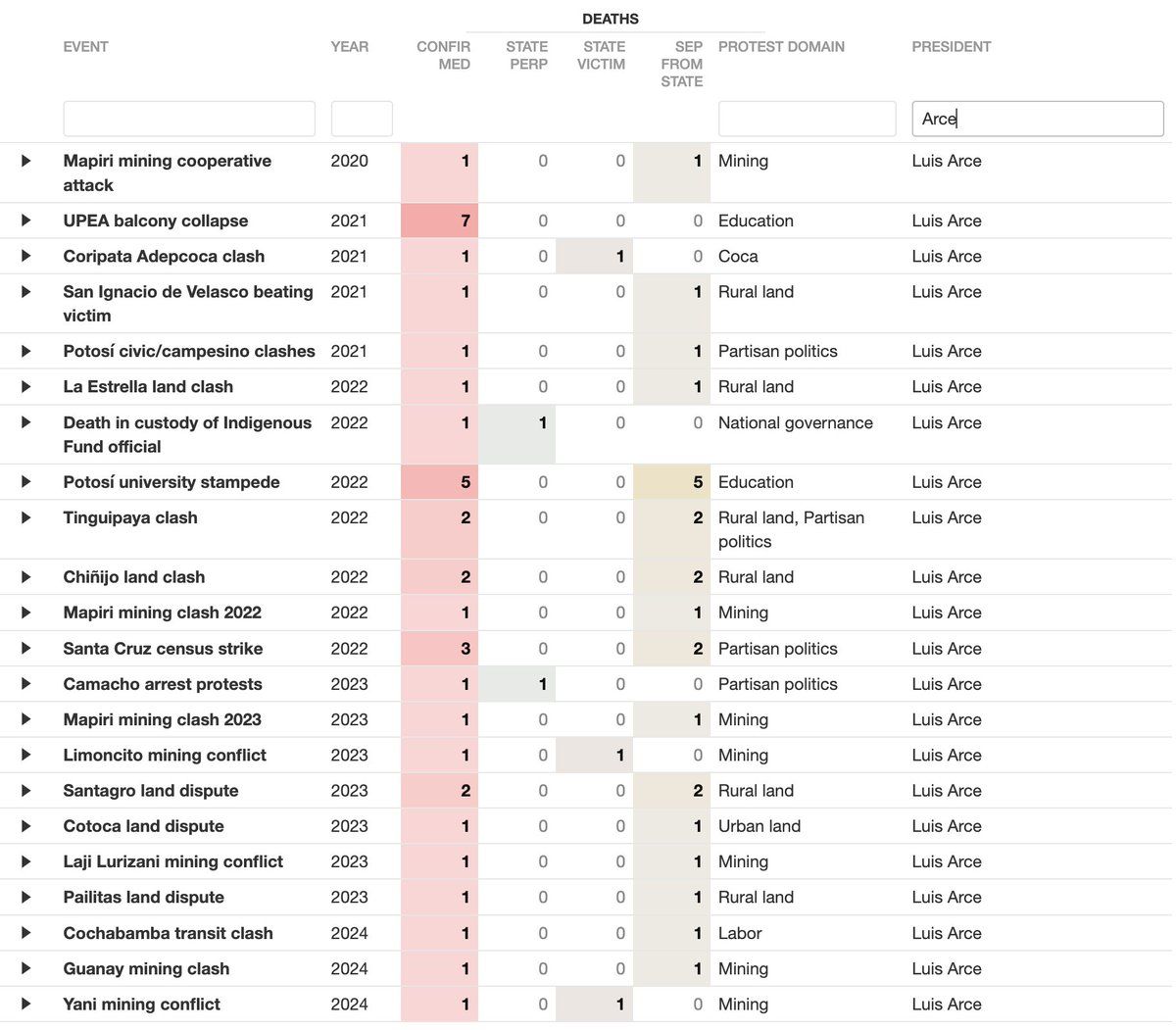
The yellow indicates violence separate from the state, largely internecine conflicts among claimants to rural land, and between miners and locals, and an unfortunate stampede in student elections.Permalink On twitter.com
 Mood -7 🙁
-
Still, four of the deaths took place in the context of partisan, left–right confrontations, a seeming reprise of the catastrophic stalemate of 2006-09 and the violence between the 2019 election and Evo Morales's resignation.Permalink On twitter.com
Mood -9 🙁
-
All three of the deaths of state security forces came in instances where the Arce government intervened to stop violence between conflicting communities of its own supporters, in conflicts over coca union leadership in Apolo, over mining in Sorata and El Torno.Permalink On twitter.com
❤️ 1 Favorite
Mood -8 🙁