-
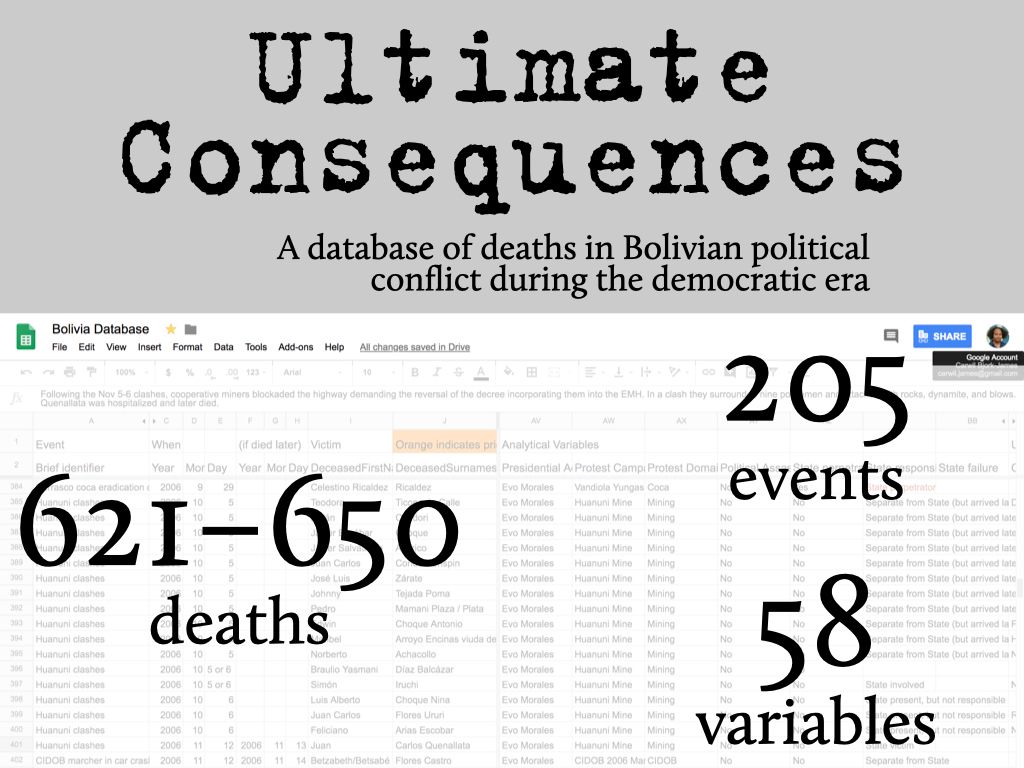
What does the data from Bolivia tell us the success of unarmed militant protest in the face of deadly repression? I used our dataset of four decades of protest deaths to find out.Permalink On twitter.com

 ❤️ 2 Favorites
Mood -7 🙁
❤️ 2 Favorites
Mood -7 🙁
-
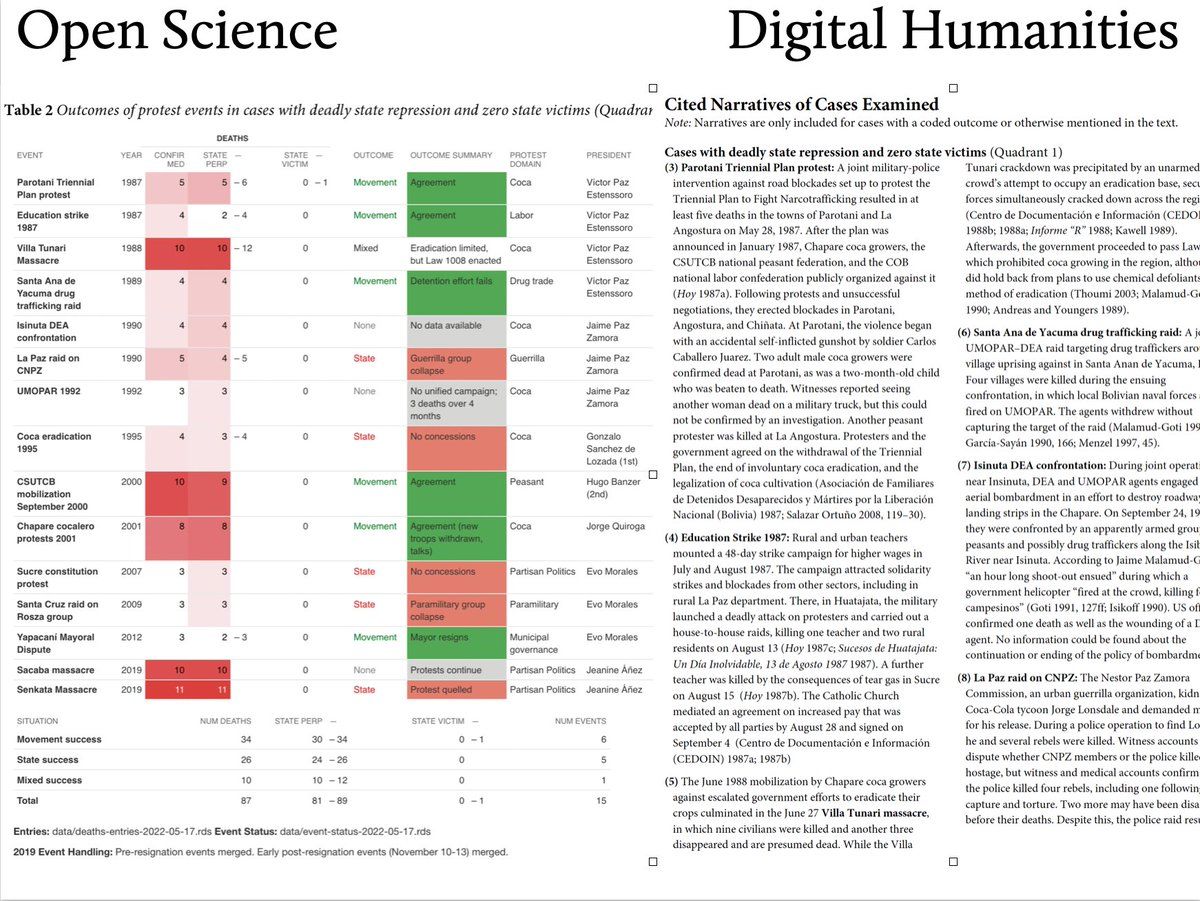
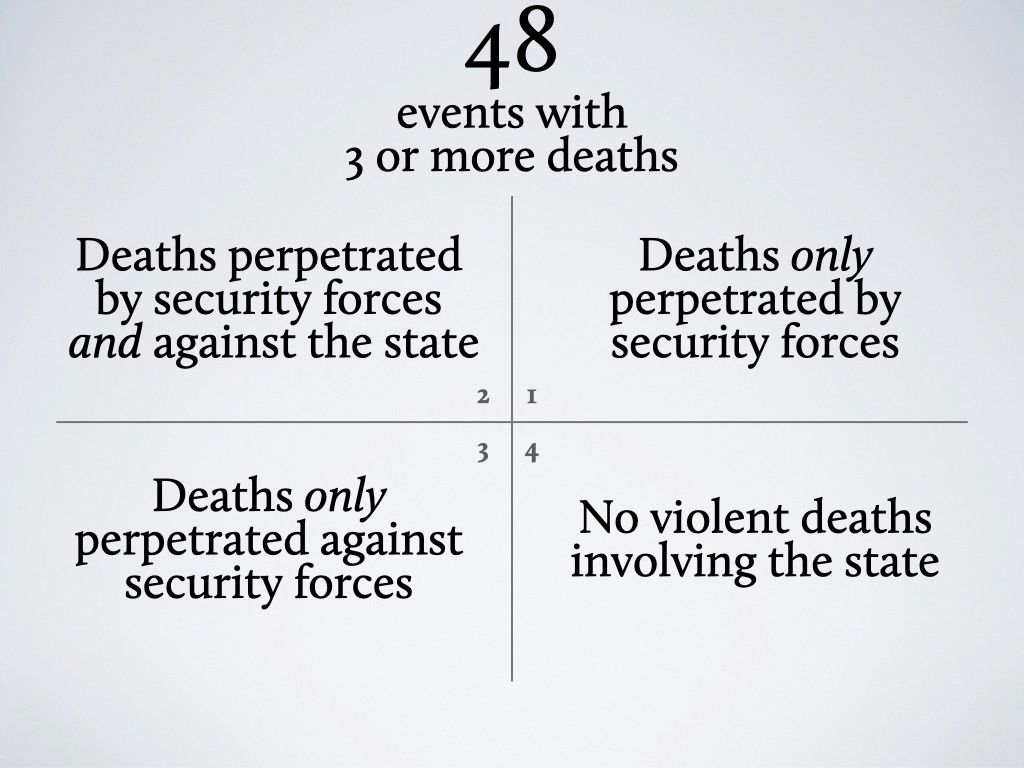
There were 48 events between 1982 and 2019 in which three or more people were killed in Bolivian social movement activities. The article provides narrative summaries (in the supplement woborders.files.wordpress.com/2024/04/supplement-combined-6feb2024.pdf) and a table of outcomes (ultimateconsequences.github.io/ultimate-consequences/WLRF-Tables.html#assign-events-to-quadrants)Permalink On twitter.com
 Mood -3 🙁
-
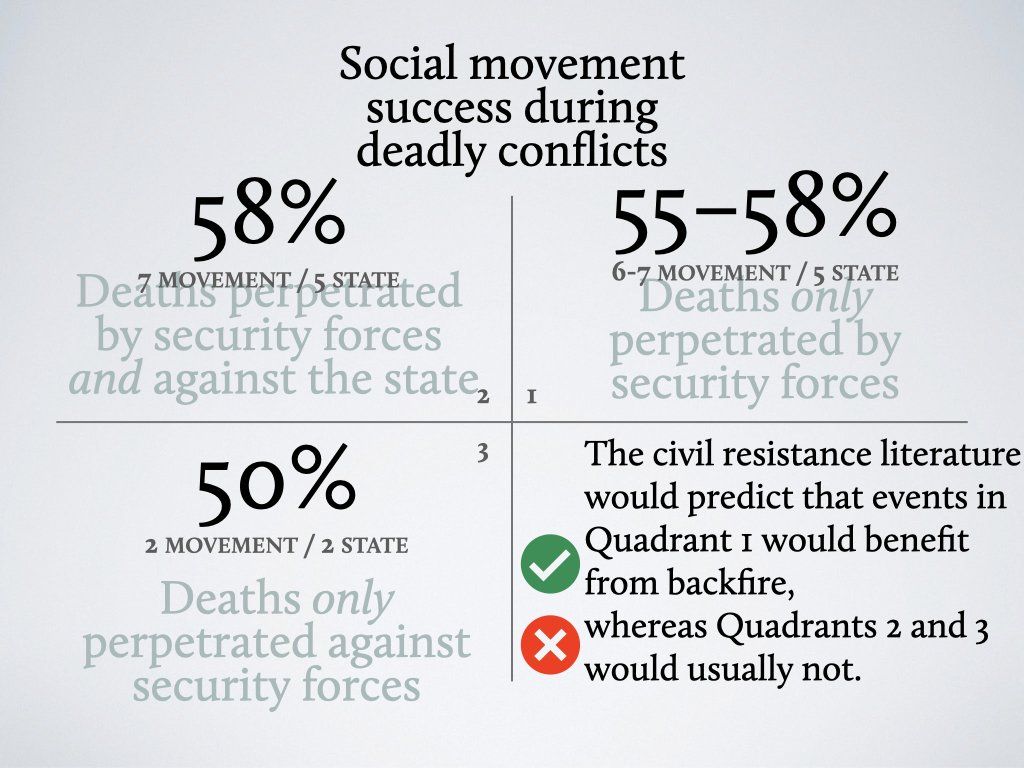
The analysis divides up the 48 events into four quadrants, based on whether or not the state perpetrated deadly violence and whether or not state security forces were killed.Permalink On twitter.com
 Mood -11 🙁
-
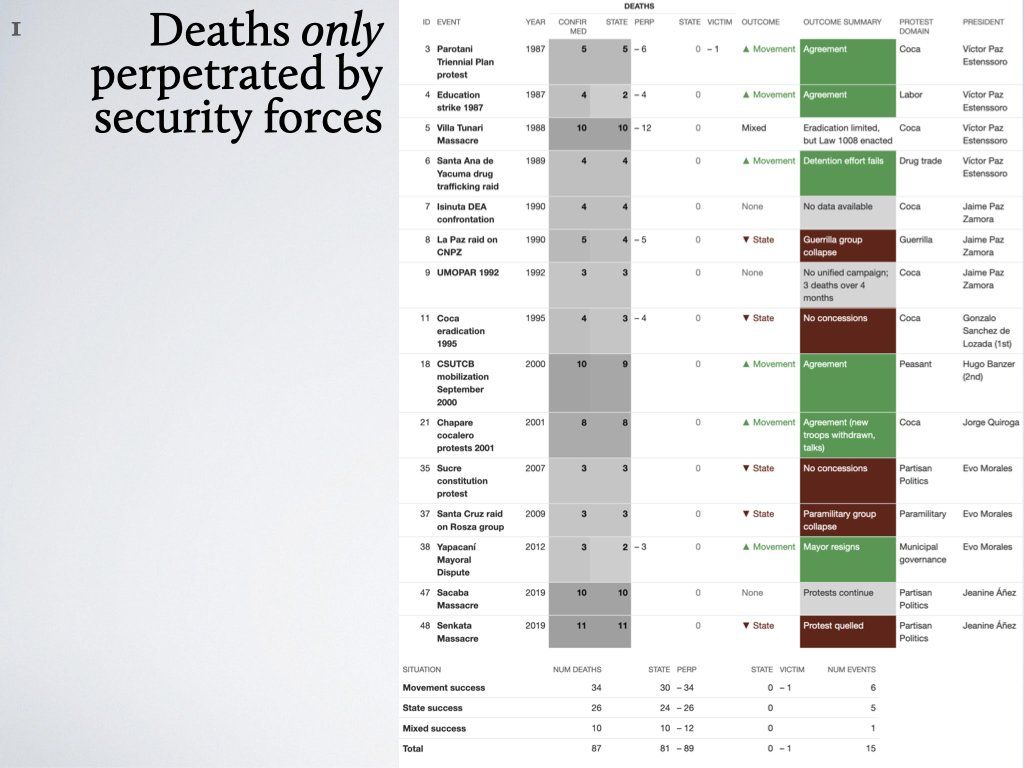
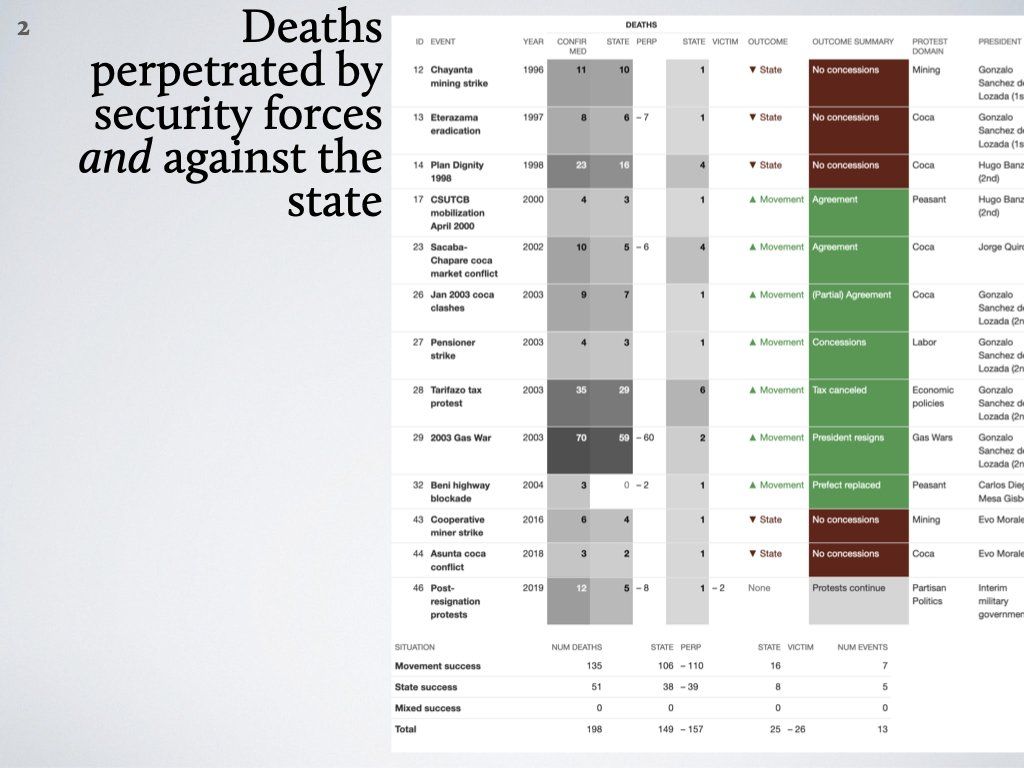
One would have expected a dramatic difference between cases when protesters killed security forces in counter-violence, and when they did not. But there wasn't one. Protesters mostly succeeded in either case.Permalink On twitter.com
 Mood -4 🙁
-
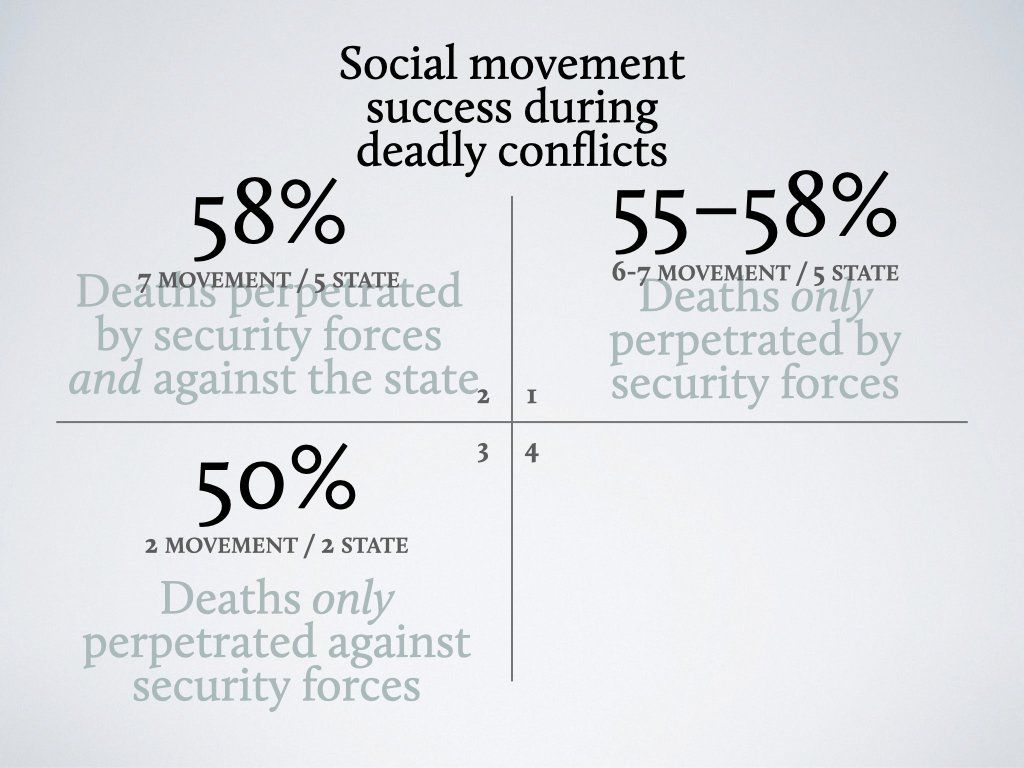
Overall social movements succeeded more often than not in these deadly conflicts, irrespective of whether they used lethal counterviolence. In the small number of cases where only security forces were killed, there were 2 movement successes and 2 state successes.On twitter.com
 Mood -7 🙁
-
The civil resistance literature would predict that events with unanswered state violence would benefit from backfire, whereas those with deadly violence by movements would usually not. Their judgment on movements' use of deadly force did not hold here.Permalink On twitter.com
 ❤️ 1 Favorite
Mood -10 🙁
❤️ 1 Favorite
Mood -10 🙁
-
The analysis presented so far did not exclude the two events involving organized armed groups (1 guerrilla, 1 paramilitary) or the unorganized but sometimes armed cocalero movement. Our qualitative comparative analysis looked at this.Permalink On twitter.com
Mood +1 🙂
-
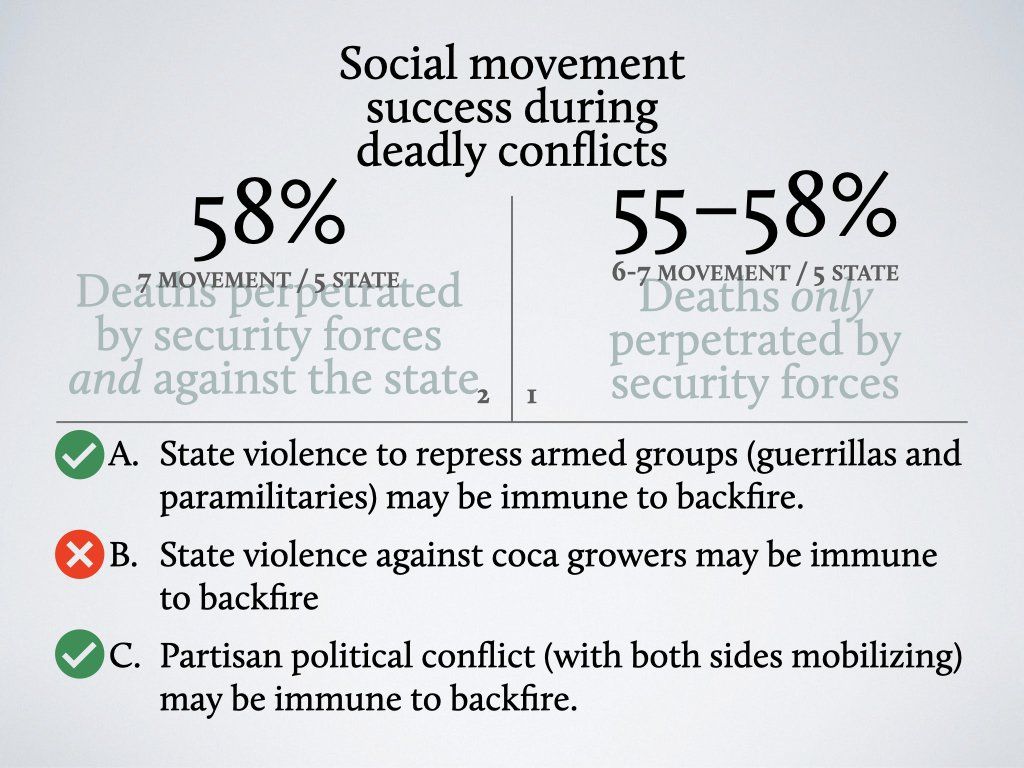
Working iteratively to understand why backfire didn't happen in some cases of one-sided state repression, I proposed three hypotheses: separating out armed actors, the coca movement, and dueling partisan mobilizations.Permalink On twitter.com
Mood 0
-
I could then look across all cases in the 3+ deaths sample, and also in the larger dataset of 204 events. Guerrillas and paramilitaries were always successfully repressed without backfire. And dueling partisan mobilizations also ended without backfire for state repression.Permalink On twitter.com
Mood +1 🙂
-
But the other hypothesis, that the coca conflict would benefit less from backfire, either because it sometimes used armed violence or because of drug war pressures from the US, did not hold. Coca growers were just as successful, winning 56-60% of the time.Permalink On twitter.com
 Mood +2 🙂
-
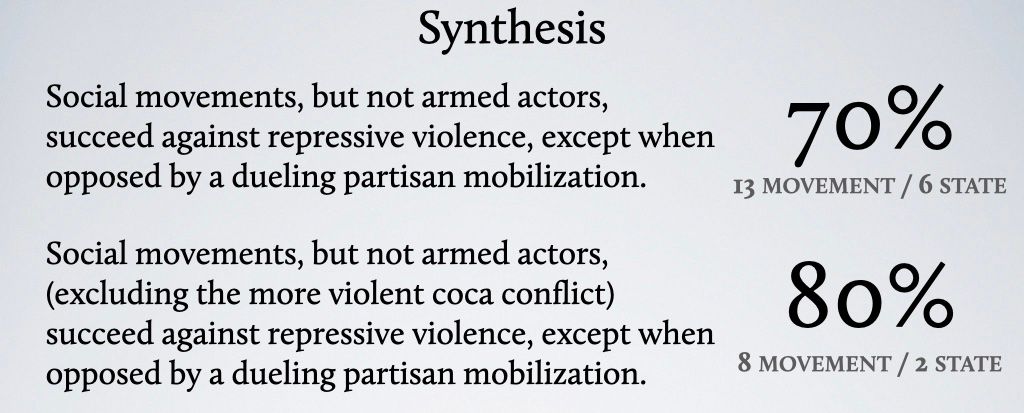
A goal of qualitative comparative analysis is to synthesize outcomes into a "causal recipe" like this one: "Social movements, but not armed actors, succeed against repressive violence, except when opposed by a dueling partisan mobilization."Permalink On twitter.com
 Mood +2 🙂
