-
Zionism's/Israel's internal inequality, racism, creation of refugees, and unrestrained violence have created moral crises for generations of Jewish scholars. Until I encountered these recent works, I was unaware of important links in the chain…Permalink On twitter.com

 ♻️ 5 Retweets
❤️ 8 Favorites
Mood -6 🙁
♻️ 5 Retweets
❤️ 8 Favorites
Mood -6 🙁
-
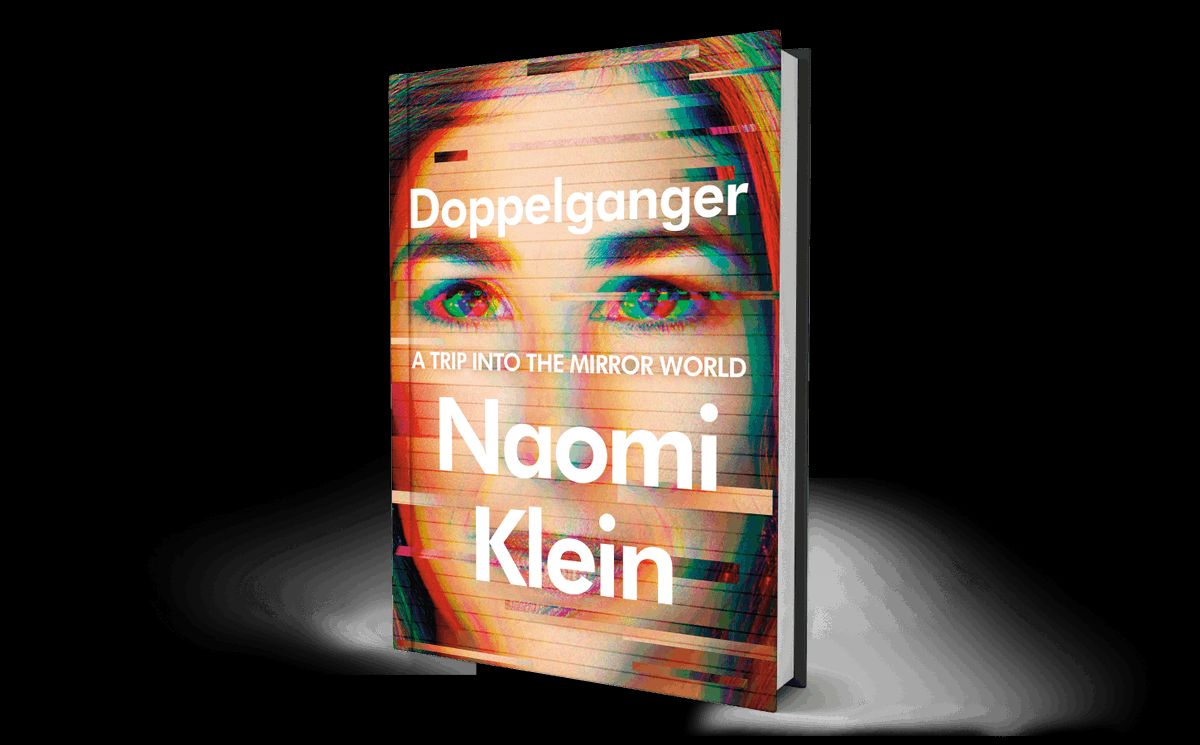
1. In Doppelganger, Naomi Klein's @NaomiAKlein history of Zionism places it as alternative to Eastern European left efforts to claim a place locally. The relevant chapters are posted online (w/ publisher's permission) here: naomiklein.org/wp-content/uploads/2023/12/Israel-Palestine-and-the-Doppelganger-Effect.pdfPermalink On twitter.com
 ❤️ 4 Favorites
Mood 0
❤️ 4 Favorites
Mood 0
-
@NaomiAKlein At the core of the Jewish Labor Bund approach was "doi’kayt, or “hereness”—the idea that Jews belonged where they lived, in what was known as “the pale of settlement,” and should fight for greater rights and increased justice as Jews and as workers."Permalink On twitter.com
❤️ 3 Favorites
Mood +6 🙂
-
@NaomiAKlein "The Bund held fast to the belief that Jews would be free when everyone was free, and not by building what amounted to a militarized ghetto on Palestinian land. 'Your liberation can only be a by-product of the universal freeing of oppressed people,' wrote Victor Alter in 1937."Permalink On twitter.com
❤️ 3 Favorites
Mood +3 🙂
-
The books is laid out in much detail in this interview on The Fire These Times podcast. thefirethesetimes.com/2024/02/16/israel-and-american-jewish-dissent-w-geoffrey-levin/ This suggests a much more ambivalent community, especially before the 1967 war, and discusses efforts to suppress American Jewish dissent on Israel/Palestine.Permalink On twitter.com
♻️ 1 Retweets
❤️ 1 Favorite
Mood -5 🙁
-
These dissents within the organized American Jewish community were of course paralleled by secular exiles from that community, most notably Noam Chomsky. But the dissent was far wider than I was aware of.Permalink On twitter.com
Mood 0
-
3. Pankaj Mishra's essay "The Shoah After Gaza" is in large part a telling of the dissents occasioned among Shoah survivors over Israel long before 2023. lrb.co.uk/the-paper/v46/n05/pankaj-mishra/the-shoah-after-gazaPermalink On twitter.com
❤️ 1 Favorite
Mood 0
-
And this has been the most suprising and impactful given that the voices involved are people I was familiar with… Notably, two analysts of the Shoah/Nazi genocide I've relied upon, Saul Friedlander and Zygmunt Bauman are prominent in this story alongside Primo Levi.Permalink On twitter.com
❤️ 1 Favorite
Mood +2 🙂
-
"Saul Friedlander, the foremost historian of the Shoah, who left Israel partly because he couldn’t bear to see the Shoah being used ‘as a pretext for harsh anti-Palestinian measures’…"Permalink On twitter.com
❤️ 1 Favorite
Mood -2 🙁
-
"Zygmunt Bauman, the Polish-born Jewish philosopher and refugee from Nazism who spent three years in Israel in the 1970s before fleeing its mood of bellicose righteousness, despaired of what he saw as the ‘privatisation’ of the Shoah by Israel and its supporters. …Permalink On twitter.com
❤️ 1 Favorite
Mood +3 🙂
-
"It has come to be remembered, he wrote in 1988, ‘as a private experience of the Jews, as a matter between the Jews and their haters’, even as the conditions that made it possible were appearing again around the world."Permalink On twitter.com
Mood +1 🙂
-
Bauman's work pointed far beyond this, to a modern capacity for ultraviolence and new holocausts. He reframed the danger as a problem of states and bureaucracy.On twitter.com
❤️ 1 Favorite
Mood -4 🙁