-
@Sashaonthego I'm still processing my sense of betrayal by this reporting, and wanted to share the latter piece (some days later) to interrupt the take I shared before. 1/Permalink On twitter.com

 Mood -3 🙁
-
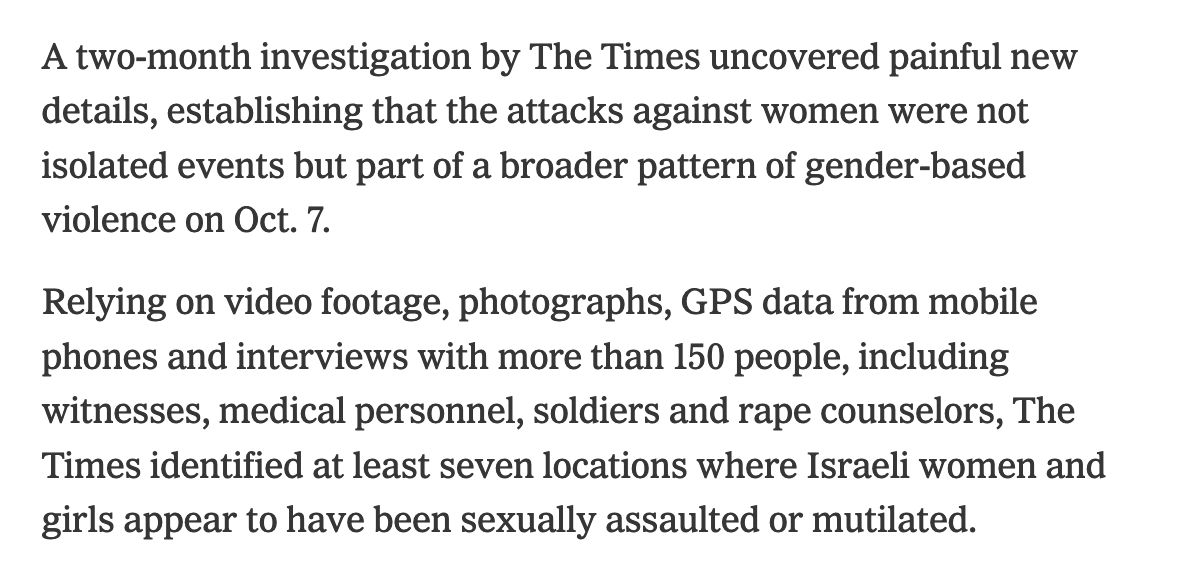
@Sashaonthego This language grounding the reporting should mean something, which I immediately read in the context of past NYT reporting on elite sexual assault, rather than say on Iraqi WMDs. 2/Permalink On twitter.com
 Mood -2 🙁
-
@Sashaonthego The overlap between partisan and forensic sources is too large in this case, for reasons the article made clear. A proactive state response that believed severe allegations require serious evidence would have acted differently, with photos, autopsies, rape kits. 3/Permalink On twitter.com
Mood -5 🙁
-
@Sashaonthego Whether this is due to the scarcity of violence, the chaos of the attacks, the stigma surrounding sexual assault, or the particular personnel thrown into this work is hard to know for sure. 4/Permalink On twitter.com
Mood -9 🙁
-
@Sashaonthego It definitely resonated with my past awareness of how even Shoah survivors hid their histories of abuse in Israel (largely from Ronit Lentin's Recocupying the Territories of Silence). 5/Permalink On twitter.com
Mood -4 🙁
-
@Sashaonthego In the grey zone of witness-reported but not evidenced allegations, we're in territory where people are letting their priors shape their conclusions. Only good reporting and mutually corroborating stories can help us out here. 6/Permalink On twitter.com
Mood +2 🙂
-
@Sashaonthego But my prior expectations are pretty close to those laid out here by Palestinian feminist Samah Salaime, which in words aren't so different from what I quoted from Jill Filipovic, though it's harder to find one sentence distilling it all. 972mag.com/palestinian-jewish-feminists-women-liberation-gaza-fence/Permalink On twitter.com
Mood -1 🙁
-
@Sashaonthego None of these allegations justify genocide, of course. If anything, they illustrate what young men given a mandate to kill might also do in the same places. Something likely very relevant to understanding both long-term occupation and the current mass killing in Gaza. 8/8On twitter.com
Mood -8 🙁