-
A quick run-down of the #NuclearFusion timeline and cost issues. TL;DR: Best-case nuclear fusion is too late to help w/ climate change; might never get cheaper than renewables.Permalink On twitter.com

 ♻️ 2 Retweets
❤️ 1 Favorite
Mood +2 🙂
♻️ 2 Retweets
❤️ 1 Favorite
Mood +2 🙂
-
Nuclear fusion plans involve the a multi-step process: ignition; test reactor; demonstration reactor; commercial reactor. The ITER test reactor is under construction. Should run plasma by 2025, could fuse tritium and deuterium by 2035. en.wikipedia.org/wiki/ITERPermalink On twitter.com
Mood -1 🙁
-
Facilities like the NIF, which just demonstrated break-even energy use within the chamber and ITER, which would operate at a larger scale, do not have a system or plan for absorbing that energy and making electricity. That's the role of a DEMO-class demonstration reactors.Permalink On twitter.com
Mood +1 🙂
-
Unlike a fission reactor*, fusion reactors release much of their energy in the form of high-energy neutrons. To use this energy, highly durable and expensive materials must surround the reactor and heat up, ideally transferring that energy. iaea.org/newscenter/news/neutrons-blast-fusion-materials-in-new-iaea-projectPermalink On twitter.com
Mood +2 🙂
-
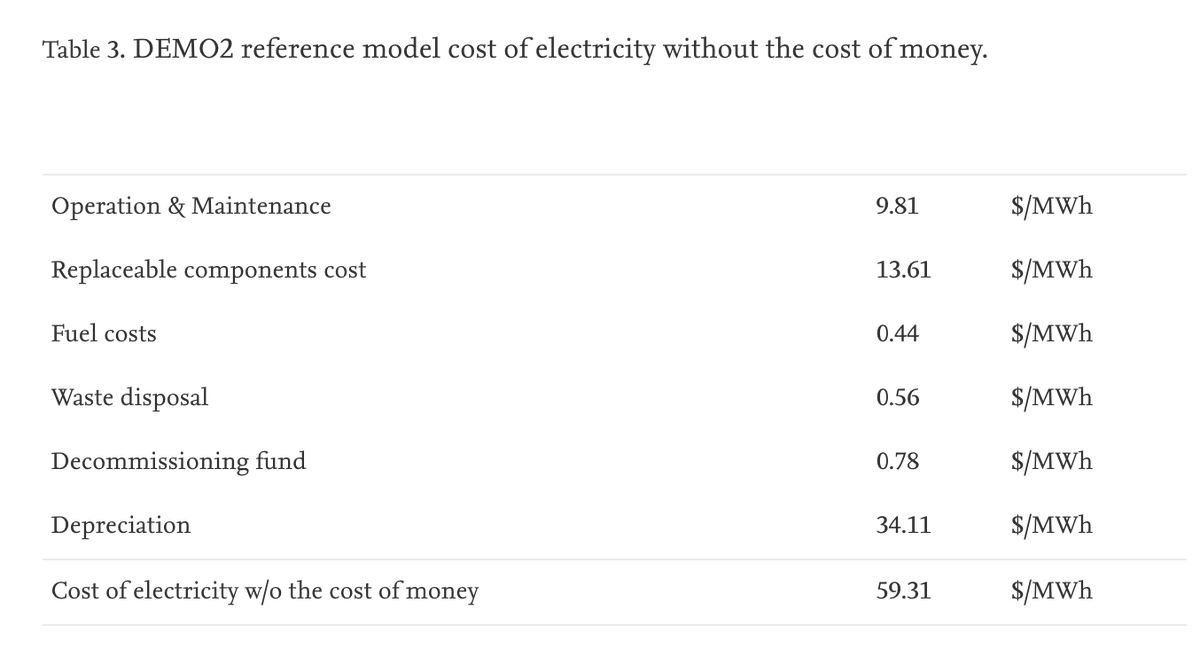
Constant irradiation means that these materials will wear out before a hypothetical fusion reactor does itself. This is why replaceable components cost is many times greater than the cost of tritium/deuterium fuel. (assuming functional material exist) sciencedirect.com/science/article/pii/S0360544218305395Permalink On twitter.com
 Mood +3 🙂
-
All of this requires a test run at the demonstration power plant level. Under the current timeline, these plants might come online in 2051. en.wikipedia.org/wiki/DEMOnstration_Power_PlantPermalink On twitter.com
Mood -1 🙁
-
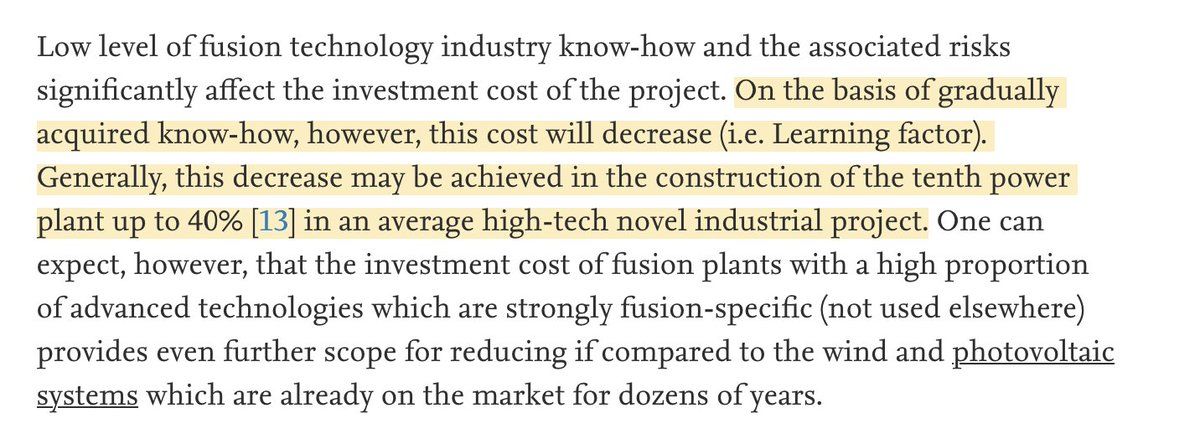
Fusion-boosting research articles like this one then assume that there will be an inherent cost reduction as multiple plants are built. The tenth plant will cost 40% less than DEMO, because technology is always getting cheaper, right? sciencedirect.com/science/article/pii/S0360544218305395Permalink On twitter.com
 Mood +2 🙂
-
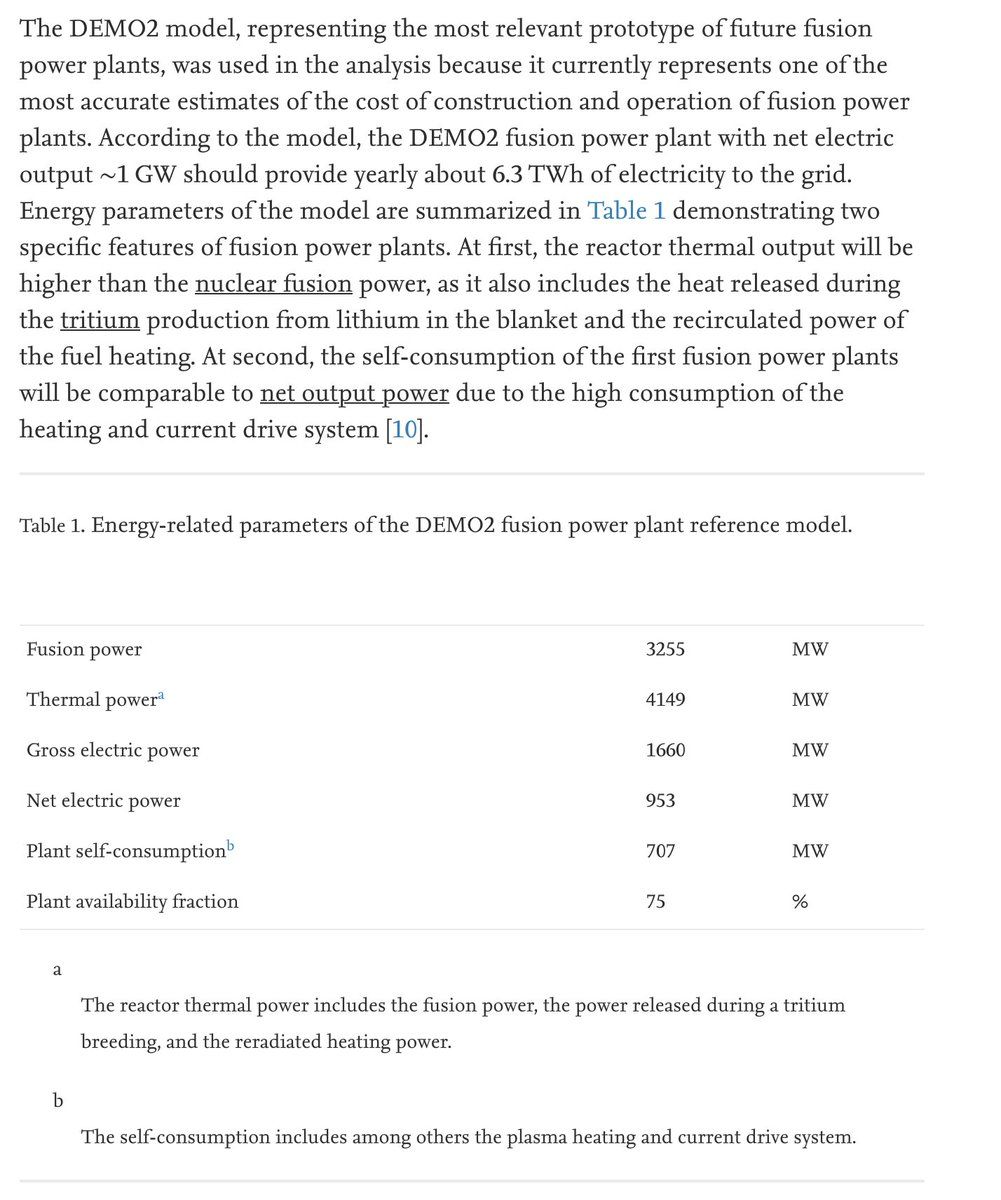
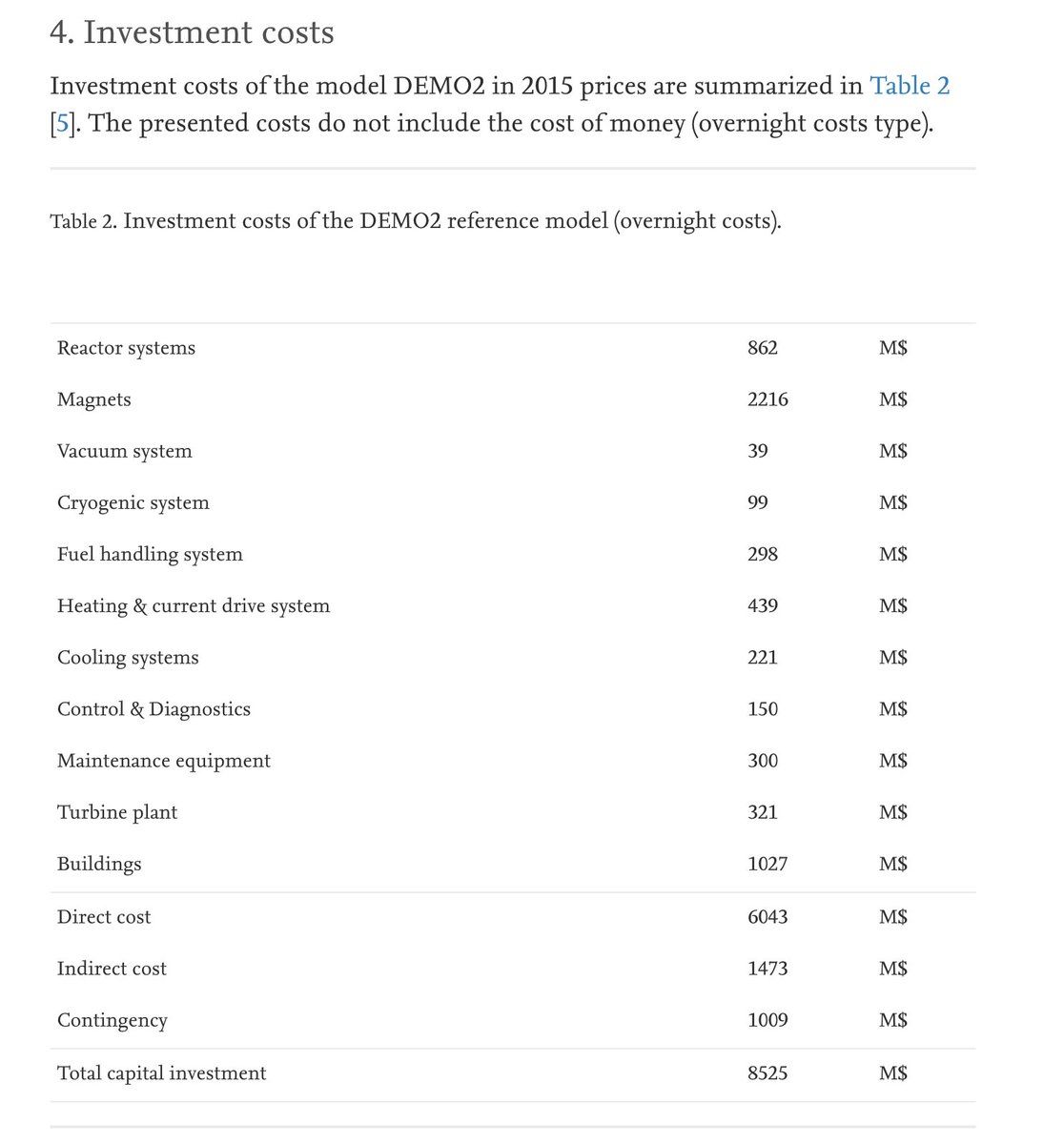
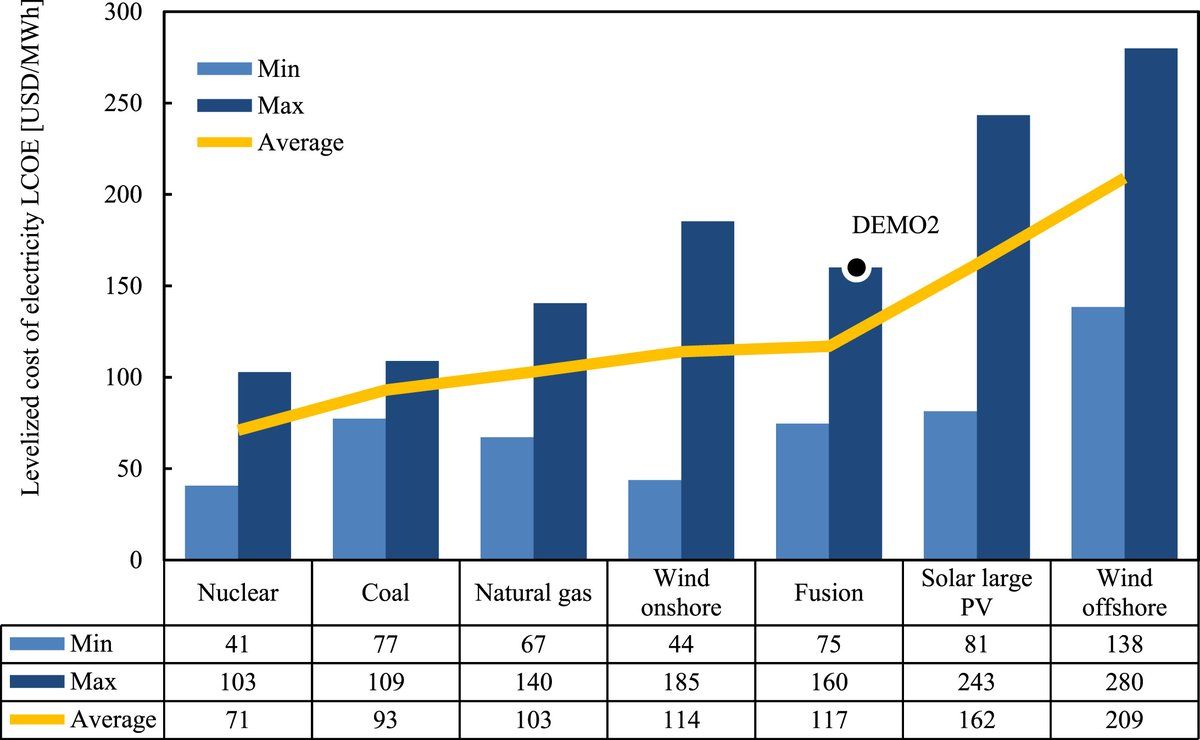
Under these scenarios we get a price tag of $8.5B for a 950MW DEMO2 power plant, in 2015 dollars. So basically, at the high-end of nuclear fission prices.Permalink On twitter.com
 Mood 0
-
In 2018, the article writers found a levelized cost of energy for fusion of $117 / MWh. Using mid-2010s costs of renewables, it was then competitive with wind and solar. But not any more…Permalink On twitter.com
 Mood +2 🙂
-
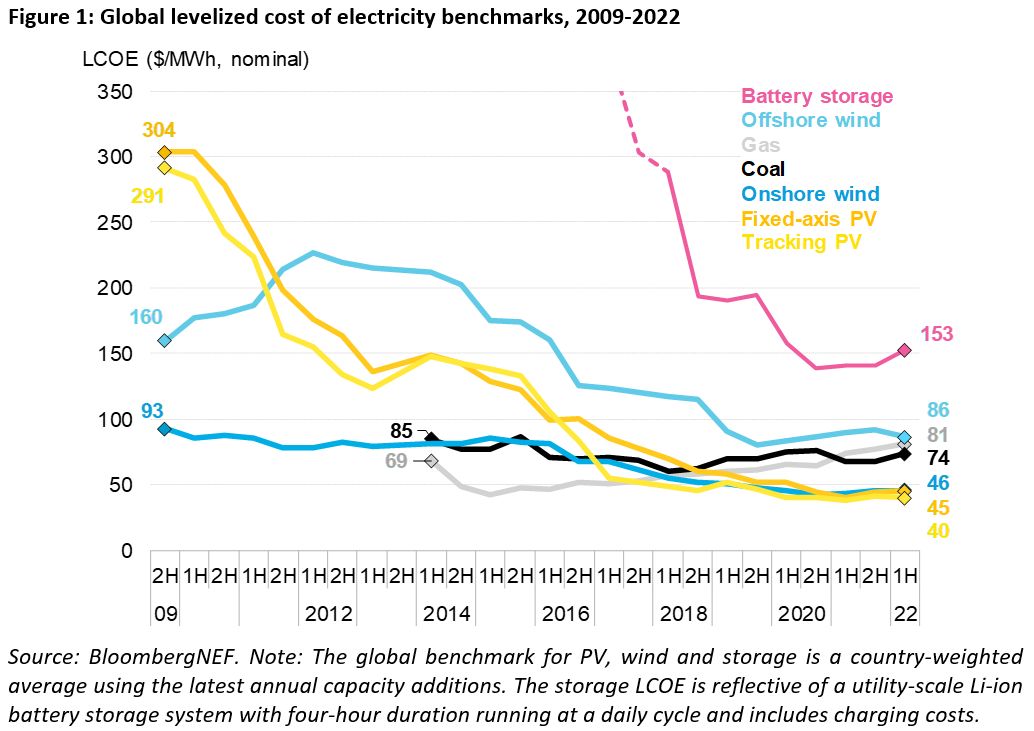
Renewable technologies are benefiting NOW from increases in know-how and the fact that there are many other industries that use silicon, magnets, and motors. Their LCOE has plunged in the past decade.On twitter.com
 Mood 0
-
So under aggressively optimistic scenarios fusion energy in 2060 could cost $94/MWh (the $75 minimum cost, subjected to inflation), more than any renewable source costs in 2022. Fusion power could simply be an uncompetitively expensive way to make electricity.Permalink On twitter.com
Mood +2 🙂
-
All climate mitigation scenarios require full replacement of fossil-fuel electricity generation before 2050. Nuclear fusion power would come afterwards, too late to matter for climate.Permalink On twitter.com
Mood +1 🙂
-
If, as I'm arguing here, nuclear fusion will never be cost competitive with renewables, its only comparative advantage is its density of power production. Perhaps there are high-energy applications (space elevators?, particle accelerators?) that would benefit from such a source.Permalink On twitter.com
Mood +6 🙂